
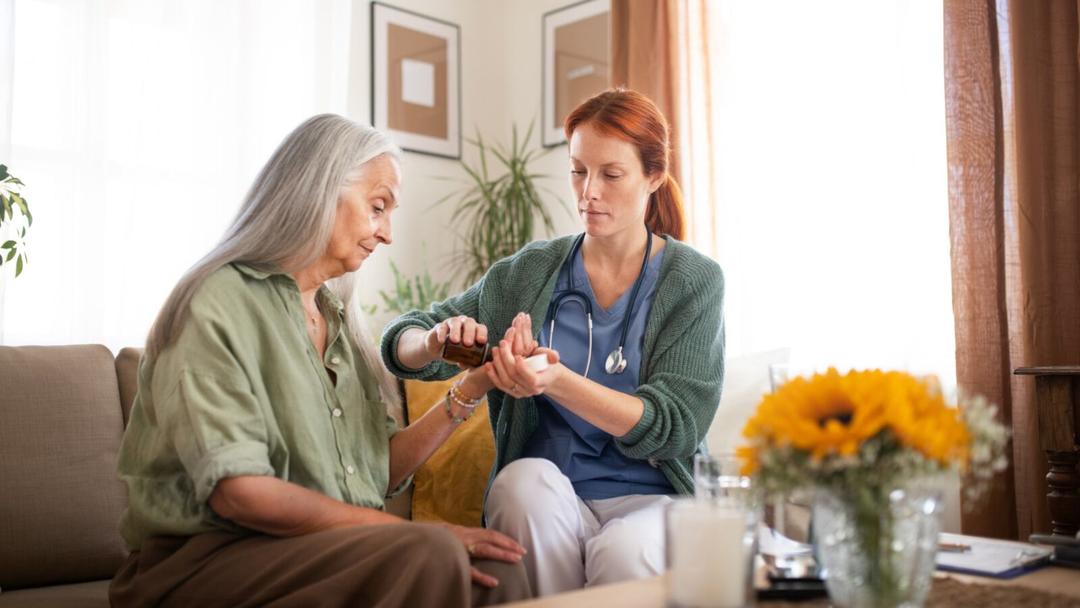
When a parent's needs start to increase, families searching in-home care vs. assisted living cost comparisons expect a clean answer. There isn't one. Jake Schmerber, co-owner of Providential Home Care in Beaverton, put it plainly during a recent conversation about pricing: families can either pay double, or pay for one.
For seniors with high-acuity needs, the real cost driver isn't the number on a brochure. It's whether you end up paying a facility's top pricing tier and outside caregiving on top of it. Here's how that math actually plays out, and when each option makes more sense for your family.
The short answer
- Most assisted living communities use tiered pricing, and high-acuity residents often go in at a level four or five from the start.
- Those residents frequently need outside caregiving on top of the facility fee, so families end up paying twice.
- For seniors with lower or moderate needs, assisted living can be a genuinely good fit, largely because of the social setting.
- For high-acuity needs, one-on-one in-home care is usually the required option, and comparing it on its own can change the math.
The "Double Billing" Problem in Assisted Living Pricing
Most assisted living and independent living communities use tiered pricing. A resident is assessed on move-in and placed into a care level, often labeled something like level one through level five, based on how much hands-on help they need. As needs grow, so does the tier, and so does the monthly fee.
Jake is direct about why this happens: "the building in general is incentivized to want somebody that doesn't need help. The more help you need, the less desirable it is for that building." A resident who can mostly manage on their own is cheap to serve and low-risk. A resident with complex medication needs, mobility issues, or a high fall risk is expensive to serve and carries liability. Buildings price for that risk.
That's why high-acuity residents often go in at a higher level from the start. As Jake explains it, "they'll already go in at a higher price because of their direct medication needs, and they'll want a risk provision, so you already go in as a level four or level five. You'll be paying top tier, and then most likely you'll also require caregiving support on top of it." That second part is the piece families miss when they compare in home care vs assisted living costs using a facility's published starting rate. The starting rate isn't the rate a high-acuity resident actually pays, and it often isn't the last cost, either. We've seen the same pattern with families whose parents end up catching two bills in behavioral assisted living.
National surveys on senior care spending, including Genworth's Cost of Care Survey, show wide variation by region and setting, which is part of why we're not quoting figures here. Your actual numbers will depend on your county, the specific community, and the level of care assessed. What matters more than any single dollar figure is understanding the structure: are you comparing a facility's base rate to full one-on-one home care, or are you comparing what a high-acuity resident would actually pay at a facility (base tier plus add-ons plus likely outside caregiving) to the cost of caregiving at home?
Why Assisted Living Still Has Real Value
None of this means assisted living is a bad option. For a lot of seniors, especially those with lower or moderate care needs, a community setting offers something in-home care can't fully replace: other people.
Jake compares it to the college dorm experience. "It gives somebody the option to be in a setting where they're around other people, a healthy, controlled environment, so they don't feel as lonely, even if they don't always participate in the activities. Sometimes it's just the feeling of being there." As we age, that kind of casual, ambient company gets harder to come by. Kids move out. Friends move away or pass on. Work friends disappear the day you retire. Jake noted that "the building experience can add to that" loneliness gap in a way that's easy to underestimate from the outside.
For a senior who's mobile, cognitively steady, and mainly needs companionship, a meal plan, and light assistance, an assisted or independent living community can be a genuinely good fit, sometimes even a better one than staying alone at home. The value isn't just the care level. It's the environment.
When One-on-One In-Home Care Wins for High-Acuity Needs
The calculation shifts once care needs climb. Jake is clear on this point: "from a direct-care standpoint, the one-on-one piece tends to be the best, and especially in high-acuity cases, that's always going to end up being the required option."
A facility staffs to a ratio. One caregiver is covering a hallway, not one person. In-home caregiving, whether it's personal care, companion care, respite care, or 24-hour live-in care, puts one person's full attention on one resident. For someone recovering from a hospital stay, managing multiple medications, or living with a condition that requires close daily monitoring, like dementia, that ratio difference is often the deciding factor, not a preference.
It's also where the double billing problem resolves itself. If a family is already paying a facility's highest tier and layering outside caregiving on top of it just to get adequate one-on-one attention, it's worth running the comparison the other way: what would dedicated in-home care look like on its own, without the facility base rate attached? For high-acuity seniors, that comparison sometimes points toward staying at home, or toward post-hospital recovery care at home instead of a facility stay altogether.
Before deciding either way, it helps to get specific about the actual level of need. A short conversation with a local in-home care provider, or a look through PHC's resource library, can clarify what a realistic care plan looks like before you commit to a facility's pricing tier or an hourly caregiving schedule.
Frequently Asked Questions
Is in-home care cheaper than assisted living?
It depends on how much care your parent needs. For a senior who is mobile, cognitively steady, and mainly needs companionship, meals, and light help, an assisted living community can be a good value and comes with a social setting. For high-acuity seniors the math changes: many communities assess them into a top care tier from move-in, and families often still pay for outside caregiving on top of the facility fee. When you compare what a high-acuity resident actually pays at a facility with the cost of one-on-one care at home, in-home care can come out ahead. Actual costs vary by county, community, and the level of care assessed.
Why does assisted living get more expensive as care needs increase?
Most assisted living and independent living communities use tiered pricing. A resident is assessed at move-in and placed into a care level, often labeled something like level one through level five, based on how much hands-on help they need. As needs grow, the tier goes up and so does the monthly fee. Residents with complex medication needs, mobility issues, or a high fall risk cost more to serve and carry more liability, so buildings price for that risk.
What is "double billing" in assisted living?
Double billing is when a family pays a facility's top care tier and also pays for outside caregiving on top of it, because the resident needs more one-on-one attention than the building's staffing ratio can provide. It's the cost families most often miss when they compare a facility's published starting rate with in-home care.
When is assisted living the better choice than in-home care?
Assisted living can be a genuinely good fit for seniors with lower or moderate care needs, especially those who are mobile, cognitively steady, and would benefit from being around other people. The community setting helps with loneliness in a way that is hard to recreate at home. Once care needs become high-acuity, one-on-one in-home care usually becomes the required option.
Conclusion
If you're weighing in-home care against assisted living for a parent in the Beaverton, Portland, or Clackamas County area, Providential Home Care can walk through what your family's specific situation would actually require, tier by tier. Reach out through the contact page to talk through your options, or browse the resource library for more on planning for higher levels of care.